Social media marketing involves promoting a businesses products or services, while building meaningful connections with audiences across social media platforms (Macready, 2025). This online tool has transformed how businesses connect with their audience, becoming essential for business success. It serves as a brand’s “best bet for reaching new audiences” (Newberry, 2025), with users spending an average of 2 hours and 27 minutes daily on social media (DataReportal, 2025).

Figure 1. Overview of Social Media Use (2025) Datareportal – Meltwater [Infographic]
It complements other digital marketing channels by driving website traffic, supporting market and customer research, monitoring competitors, managing brand image and reputation, and demonstrating return on investment (ROI) (McLachlan, 2025). Additionally, sharing posts amplifies brand visibility and creates a direct channel for personalised engagement, fostering authentic connections and customer relationships.
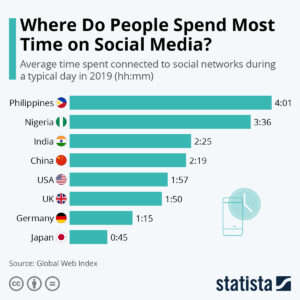
Figure 2. Where do people spend most time on social media (2019) Statista [Infographic]
By ‘turning posts into sales and conversations into long-term customer relationships’, social media enables businesses to enhance and increase their brand awareness, foster loyalty, and create sustained customer engagement beyond previous traditional capabilities (Macready, 2025).
Additionally, social media can boost conversions and harness the power of social proof through user-generated content, enhancing brand credibility and fostering trust (Joshi, 2024).
Datareportal reports there are currently 5.24 billion active social media user identities worldwide, representing over 60% of the global population (Kemp, 2025; see Figure 1). Among these users, the top-performing platforms are Facebook, YouTube, WhatsApp, Instagram, WeChat, and TikTok (see Figure 3), highlighting the global reach and influence of social media in connecting audiences across diverse markets.
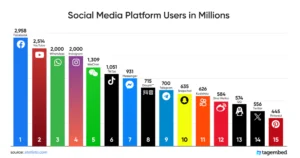
Figure 3. Overview of Social Media Use in Millions. Tagembed [Infographic]
Social media provides businesses with an additional layer of engagement, reach, and visibility (Joshi, 2024). Its advanced targeting capabilities far exceed the broad but less focused exposure of traditional marketing.
Furthermore, statistics on social media usage by age (see Figure 4) show that it spans all age groups, reaching a substantial portion of the global population. This provides businesses with opportunities to engage audiences beyond their primary target demographics, expanding overall market reach more effectively than other digital marketing channels alone.
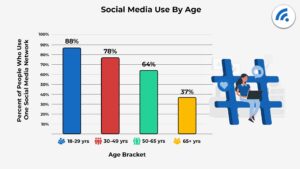
Figure 4. Social Media Use by Age (2025) Bing Images [Infographic]
Social media strategy offers business:
• Precision audience targeting;
• Cost-effective solutions;
• Enhanced engagement and personalisation;
• Data-driven insights (Tumas, 2024) (see figure 4).
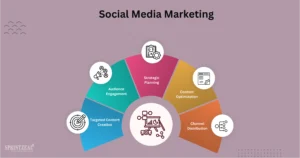
Figure 4. Social Media Marketing (2025) Bing Images [Infographic]
Traditional marketing, such as television, radio, print, and direct mail, employs a “push” approach, offering broad reach but limited targeting, which can result in wasted impressions and reduced effectiveness. In contrast, social media marketing uses a “pull” approach, attracting audiences with targeted, interactive content that encourages participation and sharing. This “two-way street” pathway strengthens brand connections, by fostering customer loyalty, satisfaction, and long-term value (Tumas, 2024).
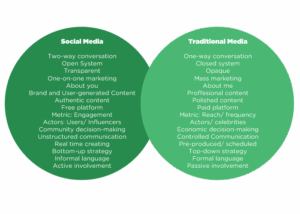
Figure 5. Social Media vs Traditional Media comparison (2025) Miro.medium.com [Infographic]
Social media is precise, cost-effective, and widely accessible; however, its effectiveness depends on a clear strategy and well-planned content.
When integrated with other digital and traditional marketing methods, it can significantly strengthen brand impact, support business objectives, and enhance overall performance.
Social media provides targeted, interactive, and measurable opportunities that surpass traditional marketing or other digital channels. Strategies must be clear, well-planned, and integrated. When combined, social media supports broader marketing objectives and enhances overall campaign performance by maximising reach and brand visibility, strengthening customer relationships and long-term engagement, driving conversions, and increasing return on investment (ROI).